Understanding the Nasal Anatomy: An Inside View of a Deviated Nasal Septum and Turbinates
There is a lot happening under the surface of the nose. The bone and cartilage under the skin give the nose most of its size and shape. Other structures inside and behind the nose help you breathe. Learning about these structures can help you understand how the nose works.
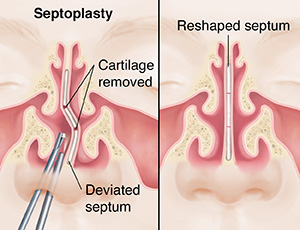
The septum is made up of bone and cartilage in the nose that divides the right and left side of the nose. A septum that is "deviated" or crooked is common. Often, a deviated septum does not require surgery. However, some patients may have a deviated septum that blocks or obstructs the natural flow of air on either side of the nose causing you to have problems.
Medication therapy may help shrink some of the membranes in the nose to improve breathing. However, in some patients who have an obstructing deviated nasal septum, medications may not give you relief of symptoms. When meds are not effective, surgery may be needed.
.
The turbinates are located on the inside of the nose. They are curved bony ridges that are lined with mucous membranes. Mucous membranes are thin tissue that also line the insides of your sinuses and throat. It makes sticky mucus that helps clean the air in the nose of dust and other small particles. The turbinates and mucous membranes warm and moisten the air you breathe through your nose.
Turbinates swell and shrink as part of a normal cycle. However, the turbinates can swell permanently causing an obstruction. This enlargement may be due to ongoing inflammation caused by allergies or non-allergic irritation. In some cases long term use and or abuse of over the counter decongestant nasal sprays can cause enlargement as well.
Symptoms of a Deviated Nasal Septum and Enlarged Turbinates
Common
-
Nasal obstruction or congestion
-
Post nasal drip (drainage down the back of the nose and throat)
-
Difficulty blowing nose
-
Trouble rinsing nose or using nasal sprays
-
Nasal blockage that is worse when lying down
Less Common
-
Headaches
-
Facial pain/pressure
-
Ear pressure
Normal Septal Anatomy and Function
The septum provides support to the nose and divides the nose into right and left compartments. The septum is made up of both cartilage (towards the front) and bone (towards the back) and runs from the front of the nose to about 3 to 3.5 inches back. In the nasal cavity, the septum is covered by the linking of the nose (nasal mucosa).
A septal deviation occurs when the septum is crooked at some point along its path. It may be crooked to just one side or to both sides - in an S-shaped pattern. Most people have some degree of septal deviation (it is not common to have a perfectly straight septum). However, treatment is only necessary when the septal deviation causes symptoms or when the deviation makes access to the sinuses difficult for patients having sinus surgery.
The causes of septal deviation are many. These can range from trauma during birth, to excessive growth of the cartilage, to sports or other injuries.
Inferior Turbinates
The nasal cavity is also made up of turbinates. These are thin bony structures that hang from the sidewalls of the nose. The turbinates are covered by nasal mucosa and help increase the surface area of the nasal cavity. The function of the turbinates is to help moisten and warm the air you breathe in. In addition to the septum, the inferior turbinates can also be the cause for nasal obstruction. If enlarged, the turbinates decrease the amount of free space in the nose for airflow.
Septal Surgery
Surgery to straighten your septum is often done together with surgery to reduce the size of your turbinates. By doing both procedures you have a better chance of improving your nasal airway.
The surgery may be done as an outpatient. This means you will have the procedure and go home the same day. This is provided you do not have any other medical conditions that would require you to stay overnight in the hospital. An example of a medical condition is obstructive sleep apnea.
The nasal surgery involves lifting the lining of the septum and removing or straightening the bent portions of cartilage and bone. Then replacing the lining and suturing it back in place. Splints are often used for a short time to keep the septum in the proper position while it is healing.
Turbinate Surgery
It may also be necessary to decrease the size of the turbinates if they are enlarged to improve overall nasal airflow. This is done by lifting the lining of the turbinate and removing extra bone and soft tissue to make them smaller.
What to Expect After Surgery
Splints
Soft plastic splints with breathing passages are placed in the nose at the time of surgery and secured in the front of the nose with a stitch. The splints will help keep the septum in place while it is healing and prevent swelling of septum and scarring during the recovery. These splits are commonly removed 3 to 5 days after your procedure in the office, this is generally well tolerated. Then patients are seen 7 to 14 days later for another look in the nose.
Medications
You will go home the day of surgery with:
-
A prescription for pain medication. Note: If you are taking a narcotic pain med after surgery it is helpful to take a stool softener to avoid constipation.
-
An ointment to use in your nose.
-
Please avoid aspirin products for a week after your surgery.
-
Instructions to flush your nose frequently with salt water to keep the splints clear of debris.
-
You will need to purchase a sinus rinse bottle for your care after surgery. There are instructions for use on the bottle.
-
You will need to purchase a gallon of distilled water to use with the salt packets in your rinse bottle. There are refill salt packets available at the pharmacy which you will need as well in the post-op period. The more irrigation is done the better you will feel.
-
You will place a pea-sized amount of ointment in your nostrils twice a day for several days after your surgery.
Activity
-
You should expect some mild oozing from the nose after surgery for about 1 to 2 days. You may need to wear a gauze drip-pad during this time. If you have on-going bleeding and are having to change the drip-pad frequently, you should contact the office, the doctor on call or go the emergency department.
-
You will be congested during the healing process, but it does improve once the splints have been removed. After the splints are removed, patients are instructed to flush the nose less frequently.
-
We ask that you take 5 days off of work to recover from your surgery. Some patients may feel well enough to return to work after about 5 days.
-
We ask that you avoid heavy lifting, bending over, and strenuous activity for 7 to 14 days after surgery.
-
Avoid blowing your nose for a week. Instead you will flush your nose when you feel the need to blow.
-
It may help to sleep with your head elevated for several days.
-
Expect to feel tired after the procedure.
-
Pain is generally not bad with the aid of pain medications, however people who are headache-prone often will develop a headache after surgery. You should not drive while taking pain medication.
-
You may run a low grade temperature 1 to 3 after surgery. However, if you have a high, on-going temperature contact the office during business hours or go the emergency room if it is after hours.
Diet
You may go back to your normal diet after surgery. However, you may find soft bland foods more appealing after anesthesia.